
Product presence/absence
Evaluated in real time within the configured camera region.
Turn presence, part and assembly checks into visual inspection events.
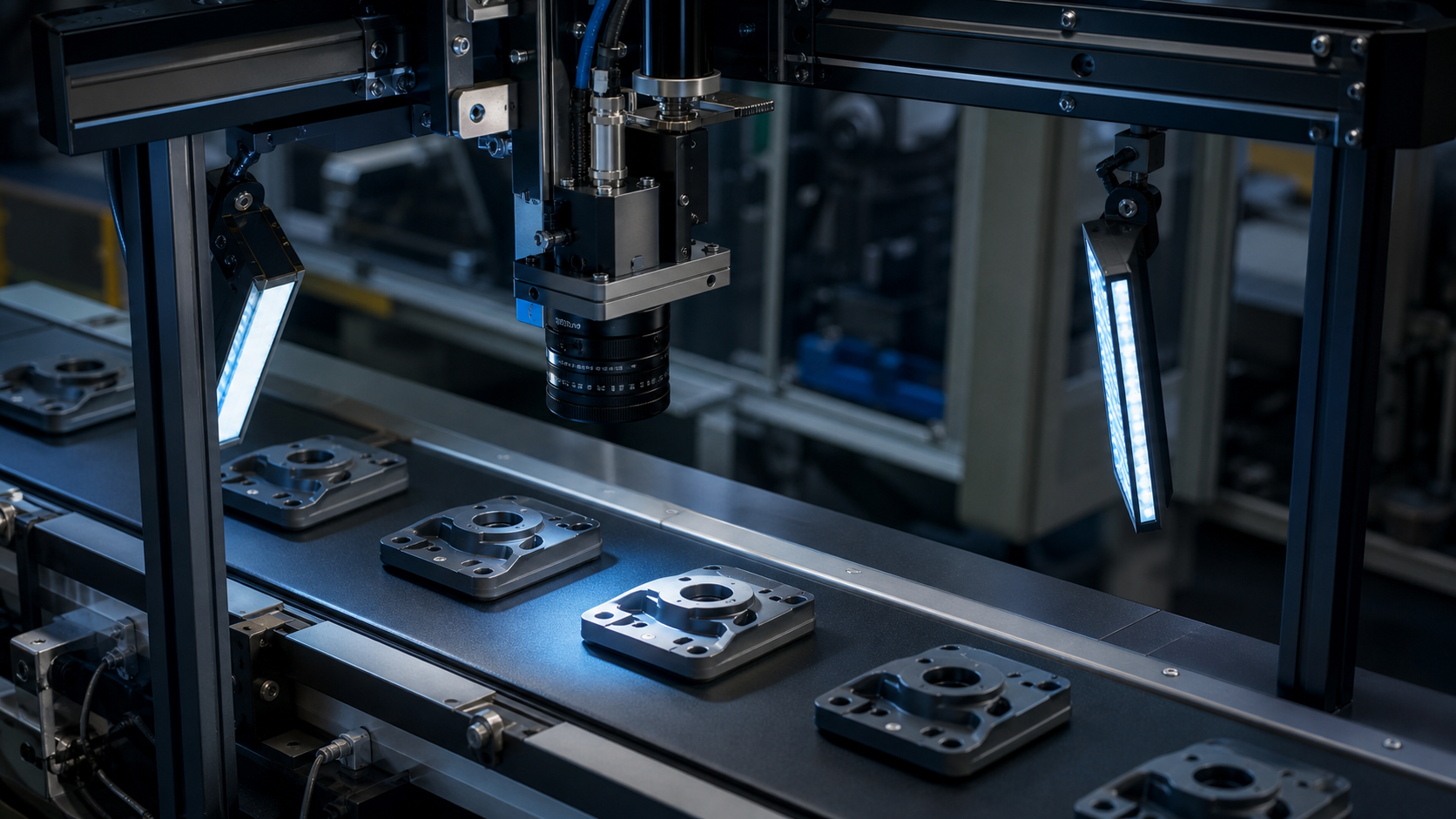 Illustrative image
Colt AI evaluates products, parts and assembly positions through configured inspection scenarios and produces time-stamped OK/NOK records.
Evaluated in real time within the configured camera region.
Evaluated in real time within the configured camera region.
Evaluated in real time within the configured camera region.
Evaluated in real time within the configured camera region.
Evaluated in real time within the configured camera region.
Camera and region rules are managed in the web dashboard. Events are recorded with camera, region, time, type and visual evidence. Notification behavior is configured by team and role.
Illustrative imageCamera count, network topology, latency needs and organizational data policies are assessed together. Colt AI is not a cloud-only solution.
The required processing infrastructure is designed around active cameras, enabled AI modules and site requirements.
Essential questions about camera compatibility, configuration and project architecture.
The integration architecture can be designed to provide outputs to plant systems according to project requirements.
Product presence, missing or incorrect parts, visual defects, assembly position and configured OK/NOK scenarios can be evaluated.
No. Visual conditions, product geometry, defect definitions and acceptance criteria are addressed for each project scenario.
Depending on configuration, inspection time, result class and the related visual record can be associated with a quality event.
Part size, movement, viewing angle, optical requirements and ambient lighting are assessed together during project evaluation.