
Fence climbing and crossing
Evaluated in real time within the configured camera region.
Real-time events for fences, virtual boundaries and restricted areas.
Colt AI relates configured fence and zone rules to human movement, creating time-stamped security events with visual evidence.
Evaluated in real time within the configured camera region.
Evaluated in real time within the configured camera region.
Evaluated in real time within the configured camera region.
Evaluated in real time within the configured camera region.
Evaluated in real time within the configured camera region.
Real COLT AI product views from human tracking and safe thresholds to fence contact and confirmed boundary breaches.
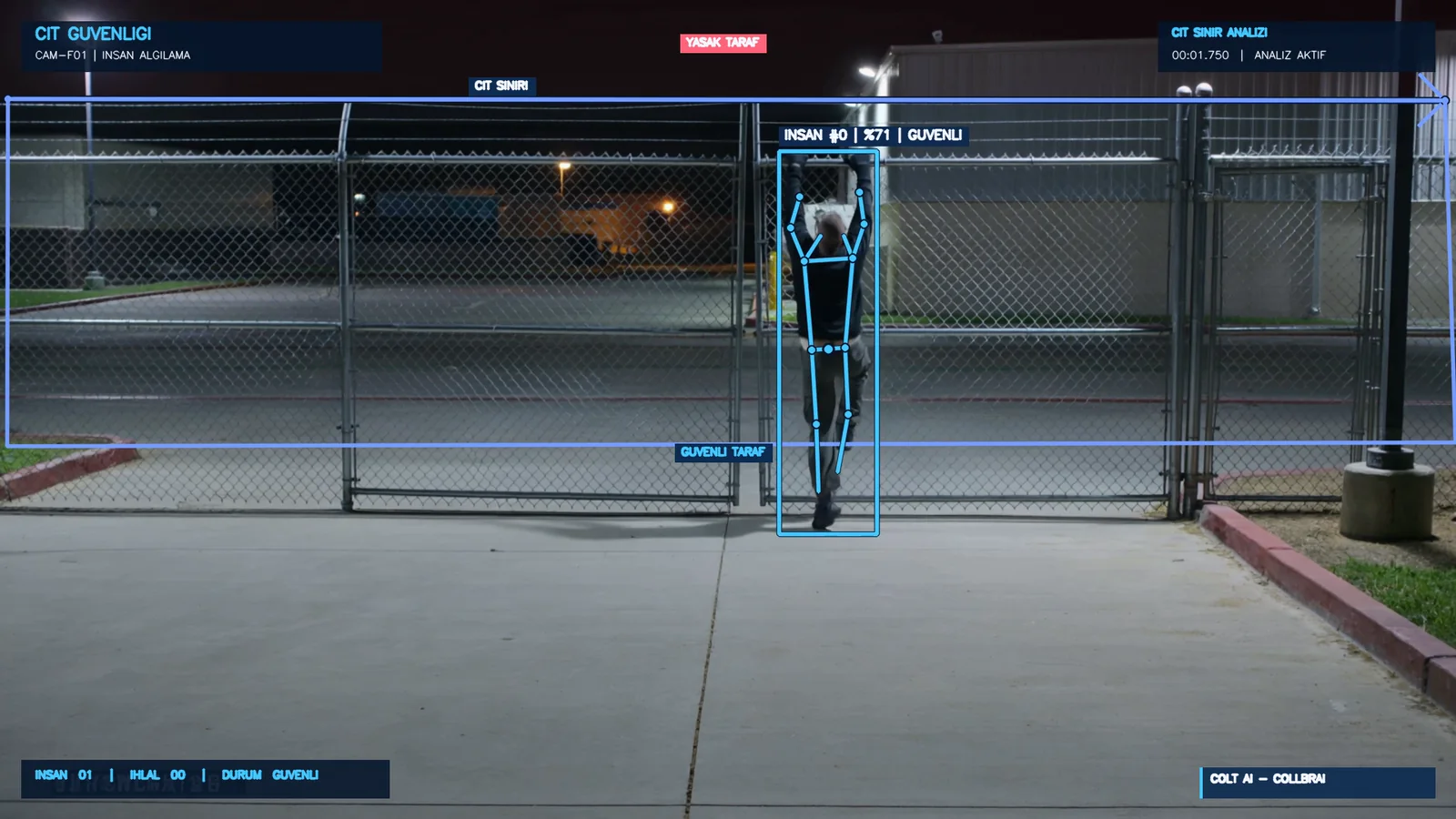
Bounding box, tracking identity and keypoints from a frontal camera.
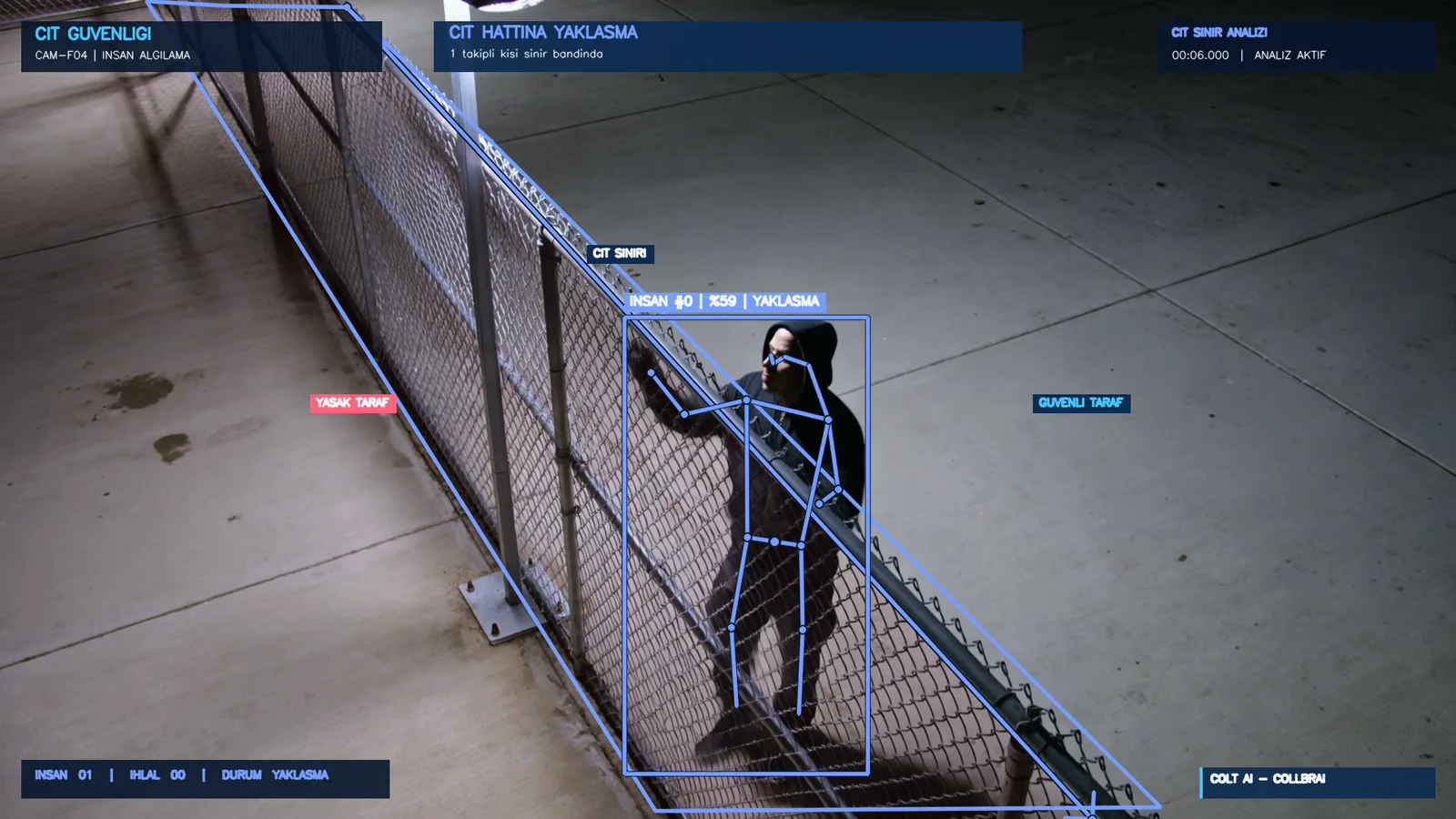
Rather than deciding from a single frame, Colt AI evaluates a person's approach, fence contact, climbing behavior and boundary crossing as a sequence. A critical event is created only when the configured conditions are confirmed.
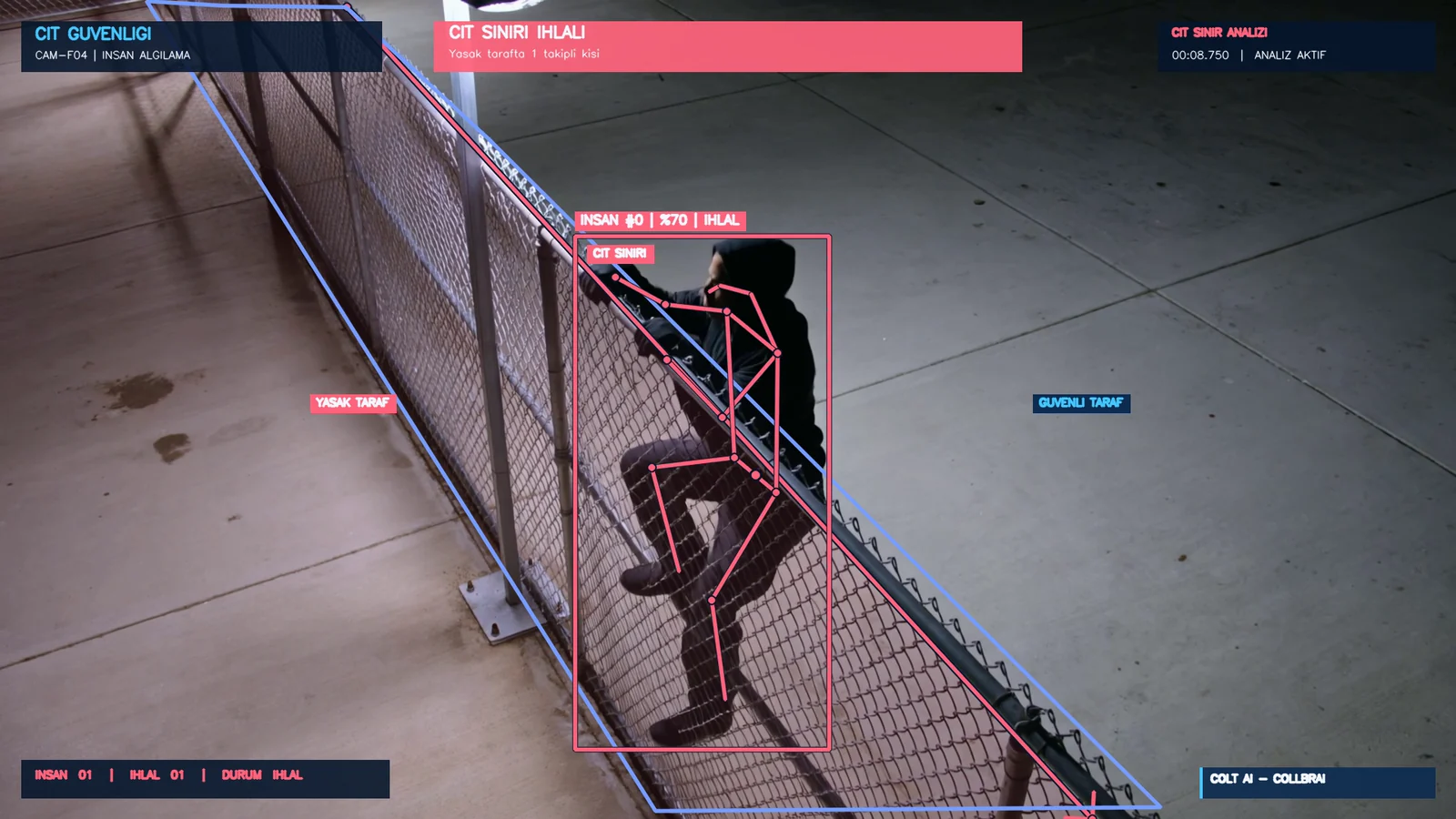
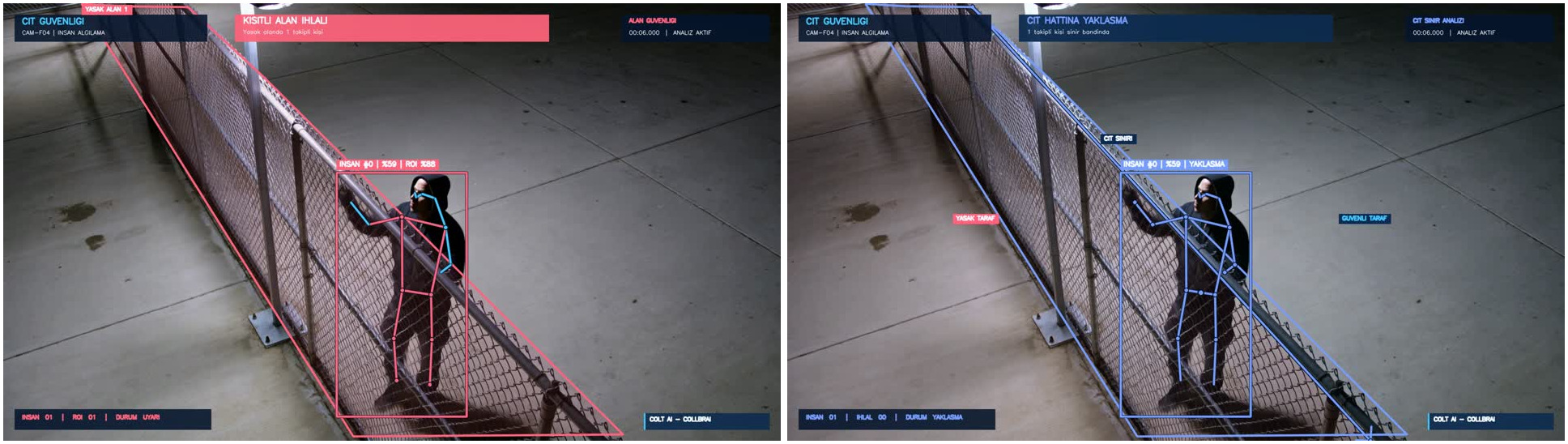
Zone geometry, pose signals and temporal behavior are evaluated together to distinguish an early alert from a confirmed boundary breach. Thresholds and event rules are configured for the site scenario.
Camera and region rules are managed in the web dashboard. Events are recorded with camera, region, time, type and visual evidence. Notification behavior is configured by team and role.
Camera count, network topology, latency needs and organizational data policies are assessed together. Colt AI is not a cloud-only solution.
The required processing infrastructure is designed around active cameras, enabled AI modules and site requirements.
Essential questions about camera compatibility, configuration and project architecture.
IP camera and NVR infrastructure can be included following a compatibility assessment.
Separate event rules can be configured by evaluating region geometry, fence contact, movement and temporal behavior together.
Yes. ROIs, virtual lines and restricted zones can be configured separately for each camera view and field scenario.
Depending on configuration, camera, region, time, event type and related visual evidence can be retained in event history.
Camera position, lighting, image quality and the target scenario are evaluated together during compatibility assessment.